Girlguiding in the 1910s
- Dec 28, 2021
- 7 min read
Updated: Dec 31, 2021
1910
Continuing on from the separation from the Scouts, Agnes Baden-Powell was given a £100

loan (roughly £12,500 in todays money) from her brother Robert Baden-Powell to help start the new Girl Guides movement. With the money Agnes rented a room in the Boy Scout Head quarters, alongside buying badges and she began the registration progress for Units and individual Guides to join, guiding at the time being for ages 12-18.
The first Guide unit was registered, being 1st Pinkneys Green Guides, located at Pinkneys Green, Berkshire, run by Agnes Baden-Powell herself.
With the money two pamphlets were produced with new information which would organise and run meetings, alongside these two pamphlets and a scheme published by the Scouts Headquarters Gazette named 'Scheme for Girl Guides'. Besides the new information found in these 3 items, there was little information for help, and many units continued to use the 'Scouting for Boys' instructions whilst using their own judgement to adapt the program. The girls continued to work on the Scouts program challenges and badges, adapting them to their own program.
It was clear the structure of the new program wasn't focused specifically. In the following year, 1911, 5 Edinburgh Guide units paraded for a Royal Visit in Scotland but realised they weren't united by uniform, although following the same basic garments, colours worn varied in brown, blue, green and scarlet.
1912
At the start of 1912, Robert Baden-Powell was on his way to New York as part of a lecture tour, whilst travelling Robert met a woman named Olave. They got married in October that year, Olave became known as Lady Baden-Powell (An Iconic figure within Girlguiding today).
In 1912 Agnes produced her first Guide Handbook, 'How Girls can Help Build an Empire', an adaptation from from Robert Baden-Powells 'Scouting for Boys'. The book was tailored for the Girl Guiding program. During the time, parents of young girls were becoming worried that their girls wouldn't turn out how they were expected to at the time, that following a boys program would turn them into 'tomboys' and neglect their home duties. Part of the release of the 'How Girls can Help Build an Empire' was to help reassure parents this wouldn't happen.
With large sections remaining the same as how Robert Baden-Powell had written them, Agnes had reworked sections to include more female-skills for the time, such as child care, nursing, cooking and other domestic skills. Though it is said Agnes stated the program would be more suitable for life 'Up-country', such as in the country.
As of 1912, Girls had a choice of 27 badges to choose from, all of which could be found in Agnes' book. Badges included First Aid, Artist, Sailor, Nurse, Clerk, Cook, Cyclist, Dairymaid, Electrician, Fire Brigade, Florist, Flyer, Gymnast, Horsemanship, Interpreter, Laundress, Matron, Musician, Stalking, Tailor, Local Guide, Pioneer, Rifle Shot, Nursing Sister, Signaller, Swimmer and Telegraphist. Some of the first badges can be seen photographed below;

The new promise was also published in Agnes' book;
I Promise, on my Honour To be loyal to God and the King; To try and do daily good turns to other people; To obey the Law of the Guides.
1. A Guide’s Honour is to be Trusted. 2. A Guide is Loyal. 3. A Guide’s Duty is to be Useful and to Help Others. 4. A Guide is a Friend to all, and a Sister to every other Guide, no matter to what Social Class the other belongs. 5. A Guide is Courteous. 6. A Guide keeps herself Pure in Thought, Word and Deeds. 7. A Guide is a Friend to Animals. 8. A Guide Obeys Orders. 9. A Guide Smiles and Sings. 10. A Guide is Thrifty.
Later that year the Girl Guides began their first national subscription fee which was threepence per person a year (rough 14p in todays money) to help support units with expenses.
1914
1914 was a big year for the Girl Guides, with the start of the first World War happening. It was the beginning of the war that attitudes began to change around what women could do, and Girl Guides could put into practice and show the country how important the skills they were learning truly were. During this time many of the boys from Scouts were preparing to go into service and fight, whilst the girls stayed home and provided service in others ways they could. At the time Girl Guides had grown to around 300,000 members across the U.K.
In the August, Agnes wrote a letter stating ‘Go and cheer up families who have had to part with a father or son’ and 'Many of us will not be called into the fighting line but let us put forth all our strength to help others to be resolute and hopeful, confident that good will come'. It was important for the country to see what the Girls had been doing.
Throughout the war the girls took part in servicing the country in as many ways as they could, this included working as messengers, in hospitals changing linens, collecting items, cooking, driving ambulances and more, even reaching levels such as working for MI5. As well as these duties, the Girl Guides raised a large amount of money for several funds, such as the Red Cross.
Girls Guides introduced a badge for girls to work towards during this time known as the guides War Service badge, it was awarded for 100 hours of service in hospitals, war offices, public services and the making 15 items of clothing: 4 pr. Socks and 4 pairs of mittens, 2 shirts, pyjamas, 1 child’s garment, 1 women’s garment, 1 belt and a bed jacket for a serviceman
Alongside the war, a new division of the Girl Guides was set up. The new section was known as the Rosebuds, now known as Brownies, for girls aged 8-11. The term rosebuds was first mentioned in 'The Girl Guides Gazette'. Many of the younger sisters of older Guide and Scouts wanted to learn skills and took a growing interest in what their older siblings were doing. The name supposedly came from the idea that they would 'flower' into guides as they got older.
During the war the rosebuds didn't have quite as many duties as the Guides did, but they helped where they could. To be enrolled as a Rosebud girls needed to be able to tie 6 knots and do several bending exercises. With the new younger division set up, a new uniform was also introduced, it included a dark blue skirt, knitted jersey, cap or tam which had a the Rosebud Brooch attached to it.
The original name and uniform only stayed until 1915, the youngest members didn't take to the name 'rosebuds' and was later changed to 'Brownies', a small fairy like creature who helps people, along with a uniform change to the colour Brown.
1915
In 1915 worries began to surface about Agnes'. Girl Guides had received a grant for the Girl Guides Association, but Agnes was struggling with the organisation of the Guides, and was rumoured that the Boy Scouts would be taking back over.
1916
During 1916, the Girl Guides began to see another problem in the program. The girls were getting older and outgrowing the program and activities designed for them. The girls were around 18 and at the time weren't ready to become 'Guiders', a leader in todays terms, for an army of reasons, such as working hours. With this backlog of girls not ready to move up, there wasn't enough room to let younger members progress in the program.
To help fix this, a new division was set up named the Senior Guides, for ages 14-25, which later changed to Rangers. This program was tailored to the older girls. Their uniform was focused around the colour red, including badges with red edging and a red hat-badge. The activities focused more on serving the community than learning the new skills as they had previously done in the Guides.
As well as the Senior Guide Section, another section was set up named Cadets. This section was for older guides who wished to train to become a Guider. These girls were set up at teacher training schools and boarding schools.
1917
With the continued struggle from Agnes' and the organisation, Agnes' stepped down as president due to the increased pressure, handing the position over to Princess Mary, was was, at the time, an active supporter of the Girl Guides. Agnes' stayed working with the Girl Guides as Vice President alongside Princess Mary. This allowed Agnes to be active, wear uniform and serve as a Guide.
1918
In 1918, a Third section named the Extension Section was set up for guides with disabilities. Girls Guides were setting up units in long-stay children hospitals, which later also included schools for the blind and deaf, mental health patients and more. Children who were disabled or severely ill, who typically had little to no education and rarely saw family, were able to join the Girl Guides.
1919
Finally, in 1919 another new section called the Lone section was set up, following on from the Extension Section. This section was to help girls who could not attend regular meetings, whether this was to do with living far into the country, there wasn't enough girls in the area to make a full unit, boarding school members, etc. The 'Lones' as they were known, received their meetings by post, which held activities for each girl to work towards their badges, before sending the activities to another 'Lone' girl to allow her a turn to complete badges.
At this point, each section had different promise badges to identify each member. Blue for Guides, Red for Rangers, Blue and White for Senior Guides, Purple for Extension Section and a Blue or Red L for the Lones.

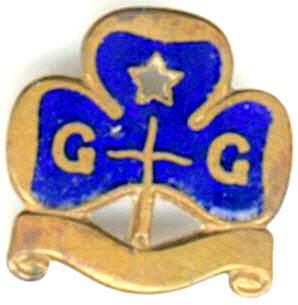


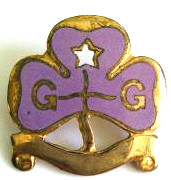
Promise Badges from Leslies Guiding History
Countries who joined the Girl Guides and Girl Scouting movement in the 1910s;
1909
United Kingdom
1910
Australia
Canada
Denmark
Finland
Poland
Russia
South Africa
Sweden
1911
India
Ireland
Netherlands
Pakistan
1912
Ukraine
Cyprus
Germany
Italy
Norway
Palestine
United States of America
Zimbabwe
1913
Chile
Egypt
Switzerland
1914
Austria
Saint Vincent and the Grenadines
Trinidad and Tobago
Uganda
1915
Argentina
Bahamas
Belgium
Bolivia
Czech Republic
Jamaica
Luxembourg
1916
Hong Kong
Malaysia
Peru
1917
Singapore
Sri Lanka
1918
Barbados
Malta
1919
Brazil
Republic of China
Ecuador
Estonia
Hungary
Israel
Japan
Nigeria
Philippines
Portugal
Slovakia


Comments