Module 1
- Sep 2, 2024
- 17 min read
Updated: Apr 8, 2025
Element 1a: Identify suitable clothing and equipment for lowland country
i. List suitable clothing and footwear


ii. List the equipment that should be carried on a day’s walk by a group member
When choosing what to take on a day's walk, choosing what to take should involve making sure you keep safe, such as taking a phone and emergency money, tools that can help with navigation such as maps as well as items to keep an individual going throughout the day, including food, water, and suitable clothing.
A more detailed list to be carried by each individual person includes:
Weather appropriate items such as sunglasses, hat, suncream, insect repellant, gloves, scarf.
Rucksack of an appropriate size
Spare clothing
Coat
Mobile phone and power bank
Money, and spare money.
Map if needed
Seating mat
Walking sticks if needed
Any medication, given to leader if its a young person
Drinking bottle which can be refilled
Packed lunch and snacks which can be eaten throughout the day
Mini personal first aid kit
iii. List the extra items that should be carried by the group
Group members can also carry extra items to support the group further
Further items carried by a group member for the group may include:
Group first aid kit, with bandages, plasters, paracetamol/ibuprofen, antiseptic cream, scissors, etc.
Map of local area with the planned route with spare navigations tools, including trail notes
Extra snacks and drinks for anybody who may need them
Mobile phone with portable charger
Bin bags for any rubbish
Spare socks or clothing
Compass, torch, watch and whistle
Emergency bank card or cash.
Powdered electrolytes or energy drink
iv. Discuss the appropriate types and quantities of food and drink to be taken
Appropriate types of food to take on a walk include:
Trail mix such as nuts, seeds, etc, which can provide quick energy when needed
Fruit such as bananas, apples, oranges, grapes.
Energy or granola bars
Hard boiled eggs or cheese for protein throughout the day
Sandwiches, wraps or bagels, pasta or rice pre-made meals or crackers or, other carbohydrate rich items to help sustain energy
Foods taken on day walks or hikes provide fuel for the body which can keep your energy up for the day. It is recommended to eat every hour whilst walking, eating little and often to help spread your energy out throughout the course of the walk. The types of snacks you need to have a variety of nutritional values, including a sugar kick, such as a small chocolate bar, carbs, such as crackers, cereal bars, etc, salt/savoury snacks, including crisps, nuts, etc. and fruits. These can be packed in a lunch box or in resealable bags, which can be easily found in a rucksack throughout the day.
For what quanities of food and drinks to take, a refillable water bottle is good to take as well as a spare bottle to carry just incase there is not somewhere to refill a bottle. A rough guide suggests to drink around 500ml of liquid each hour of walking, or to bring 2 to 3 liters per person for a full days walk, more if out in hot weather. For a day walk, rough guidance suggests taking a snack for each hour of walking, and lunch of you are out for the majority of the day, eating a healthy a nutritious breakfast before leaving for the walk. Depending on the person, it is recommended to have 2000 to 2500 calories per day.
v. Demonstrate the best way to pack, lift and carry a rucksack
How to pack a rucksack for a day trip:
Bottom of the bag, the lightest gear you are taking, such as a spare lightweight clothing, socks, spare top, etc
Middle of the bag towards the back, the heaviest gear goes here, such as water, and food, any heavier items
Middle of the bag at the front, smaller and lighter items such as a torch, compass, etc.
Top of the bag, medium weighted gear, such as maps, first aid kit, snacks, etc, stuff can be easily accessed throughout the day.
Side pockets, spare water bottles, trekking poles and other lightweight gear.
When carrying a rucksack, it is important to remember the following information, as not using the correct techniques can lead to pain throughout the torso and shoulders:
Weight distribution, 70 to 80% of the wait should be resting on a persons hip rather then the shoulders, this can be done by using the hip belt for primary support
Good posture can help to avoid further pain, done by standing upright, with shoulders back and avoiding leaning too far back or forwards.
Taking breaks can help relieve pressure when needed
Continue to check your bags straps and adjust regularly if needed, this can be to tighten or loosen to help to prevent pain and discomfort.
Element 1b: Demonstrate knowledge of, and follow, Girlguiding regulations for walking
i. Check requirements in the Adventure for girls pages on theGirlguiding website concerning walking in lowland country
To take girls walking in easy or lowland countryside, you'll need to plan a suitable route, taking into account the experience and ability of the girls. Wherever possible, walk the intended route beforehand and plan how to manage any potential risks. Check out the information on our walking safety page as well.
Easy countryside: urban locations; spare ground, recreational areas and parks; local woods, lanes, nature trails, tracks and paths in your local area, where there's no danger of getting lost.
Lowland countryside: lanes, tracks and paths, fields, woods, or other non-remote lowland areas, where the ability to read a map and find a route may be necessary but weather conditions won't be extreme and the type of country will not present any great problems.
ii. Demonstrate knowledge of adult-to-child ratios for walking in Lowland country
As this activity will take place outside of your usual meeting place the leadership team adult to child ratio is mandatory.
Rainbows: 1:5 (minimum of two leaders)
Brownies: 1:8
Guides: 1:12
Rangers: Not Applicable
iii. Inform parents of all relevant details and collect completed Information and Consent for Event/Activity forms
As my walk is for adult members, I posted an information page onto the Girlguiding North West England Inspire Facebook group with the relevant information and details including date and time, meeting point, the trail, etc. Once I have found out numbers of interest, I will be creating a group chat on Messenger or Whatsapp to be able to share the information form below and further information up until the day of the walk.
With this being an adult event, consent forms include the health information form which members will carry themselves on the day. Prior to the say I will be asking for an emergency contact and any allergies/medical conditions they wish to disclosure such as if they carry and inhaler or epipen.


iv. Send information to appropriate commissioner(s) and discuss when you might want or need to contact adviser(s)
Discussions have been had with Charlotte Stevenson (Girlguiding NWE Inspire Coordinator) who has been supporting me with organising this walk for the inspire community. All information has been sent to Charlotte as well as the risk assessment and information for the walk being sent to Girlguiding NWE Region who are happy for the walk to go ahead as well as putting me in contact with Di, the Wirrals Walking Advisor. who has also looked at the risk assessment:


v. Send relevant information to the home contact and inform her
Home Contact will be Ellie P, a friend from Cumbria South who is also an Inspire Member. The role outline form has been sent to Ellie and she is happy to be in home contact for the walk.
Element 1c: Assess and manage the risks of a lowland country walk
i. Provide evidence of having assessed the risks of a walk before setting off
Download the walk's risk assessment I have created for Delamere Forest below:
ii. Explain when and how to modify plans
Plans for a walk in lowland countryside may need to be modified or cancelled for a variety of reasons. Some of these may be to do with:
Weather changes: If the weather begins to deteriorate unexpectedly, such as heavy rain or winds, thunderstorms or extreme heat, you may need to seek shelter, turn around or cancel the walk all together. The walk may also be altered to another safer route if it is safe to continue the walk.
Path conditions: if the path is closed, unsafe, flooded, muddy, etc, you may need to modify your initial route to find away around the path safely, preferable avoiding riskier routs on further unsafe terrain.
Group needs and emergencies: If someone in the groups. becomes unwell, tired, injured, etc, you may need to take a break, find another route, or turn around.
Navigation issues: Becoming lost, or encountering an uncertainty, you may need to seek help, or turn around to find your way back.
Wildlife or livestock: Wildlife and livestock can be unpredictable and turn up in places you did not plan for, animals may be aggressive, or possibly coming across a closed path due to lambing season or nesting birds. You may need to reroute and plan a different way.
You can modify plans either before leaving if you are aware of a reason to reroute or cancel, this can be done by looking at the map and finding a new route, or changing to a different date. If you are already on route, you could work together as a team to find another suitable route, such as using a map or gps, using online to find out more information and find a safer way to go.
iii. Assess the equipment available to the group and its effect on the safety of those on the walk
Equipment available to Lancs North West include: Compasses, OS maps, fire starters, survival bags, first aid kits, small stove for water, torch, whistle. All of these equipment pieces available can help walkers in the event of an emergency to help locate themselves, find their way against maps, as well as emergancies such as in extreme weather, or survival situations.
Other available equipment for the group include 'What three words', emergency SOS and First aid Apps such as St Johns Ambulance.
iv. Re-assess plans and modify as necessary during the walk
See Walk 2 in the walking log book.
v. Explain why you would decide not to set out at all or turn around
Before setting off, the route and plans should be assessed. The leader in charge can look at the current weather, as well as the forecast for the day. If it is scheduled for heavy rain, thunder, snow, etc, or another extreme weather, such as high winds or poor visibility. then it should be decided not to go ahead with the walk. Weather may also have an impact on trail routes, such as if they get closed, or are flooded or become unsafe, such as ice patches and land slides.
This could also be done for extremely hot or dry weather where they may be little shade or risk to peoples health. If a member of the group, including the group leader is ill on the day and not fit enough to attend, then it would be best to not set out and reschedule the walk incase symptoms worsen. The walk may get cancelled or rerouted due to these reasons also.
Reasons to turn back on a walk which has already started could include:
Changing weather, if storms are approaching including lightning and weather that could reduce visibility or impact the groups safety. Sudden changes in temperature can also have an impact, such as heat or sudden snowfall.
Health and safety, such as if a group members becomes unwell or injured, for instance struggling with signs of dehydration, heat exhaustion or hypothermia. If the group gets lost and is unable to get back on track, or if terrain becomes dangerous to walk on.
Time, if the groups walk is taking longer than planned, or it begins to get dark and the group have insufficient lighting to continue.
Group dynamics, if the group are clashing through disagreements, low morale, feeling overwhelmed, etc, it may be a good idea to turn back as group dysfunction can increase safety risks.
Instinct, if there is a feeling of unease about a situation, for instance a wild animal in a feild, being followed, any other risk of danger, it may be best to turn around rather than risking safety.
Element 1d: Demonstrate knowledge of access and of conservation in lowland country
i. Explain where to obtain information on access to the countryside
Information regarding walking and accessing the countryside can be found on the GOV.UK website, for instance on the pages 'Rights of way and accessing land'. Each country within the UK also has guidelines from the likes of Natural England, Scottish Outdoor Access Code, Natural Resources Wales and Northern Irelands Outdoor Recreation. These websites can include information on rights of ways, permitted routes and open access land. You can use the websites linked above for initial information and inspiration for finding a route and then checking Open access for maps of where land may be closed for walkers. Information can also be found in the countryside code from the GOV website.
Other websites that can help provide useful information include:
Local authority: The local authority can provide information and advice on managing access to the countryside
National Parks can provide information with maps and trail information as well as up to date information.
MAGIC: Advises the access authority on local access issues
Other information could be obtained from some of the following:
Local councils and tourist information centres. They could provide maps, brochures, advice and useful information on the area.
Guidebooks which can be bought in shops or online can provide detailed local information, as well as maps, such as Ordnance Survey Maps.
Apps, Social Media and websites to have, such as OS Maps, AllTrails and Komoot, as well as looking at outdoor forums which can be updated by the walking community.
Notices and Signage in the local area can let walkers know about closures, wildlife and other information about nearby land.
ii. Explain the terms
a) Legal access: Legal access in the UK includes the right to roam, which allows a person to access open land such as mountains, moors, registered common land and more for walking, running, etc.
It refers to areas where you are legally permitted to walk, however this information could be restricted at anytime, for instance due to conservation or faming needs. Respect should be followed and the right to roam does not give a person legal access on private property or land.
b) Right of way: The right of way in the countryside is a path or walkway that is legally allowed to be used by members of the public . This could include:
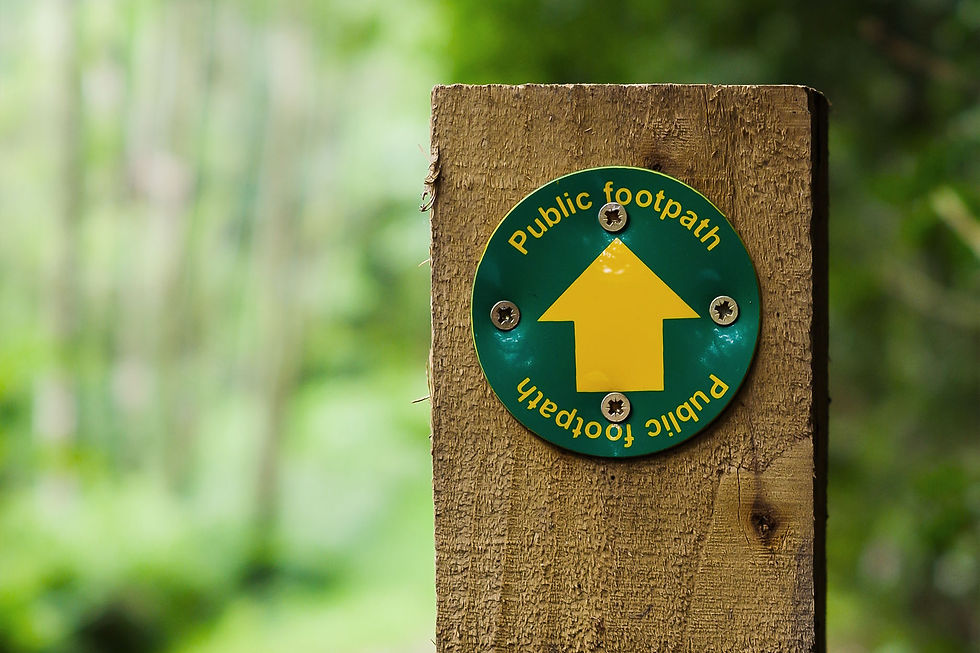
Footpaths, which are open to walkers only, these are marked with a yellow arrow.
Bridleway, which can be used for walkers, horse riding and cyclists, are marked with a blue arrow.
Restricted Byway, which are open to walkers, horse riders, cyclists and horse drawn carriages, are marked with a plum arrow
Byways open to all traffic include walkers, horse riders, cyclists, horse drawn carriages and vehicles, are marked with red arrows.
Right of way paths and walkways are marked clearly on Ordnance Survey maps and some apps. When walking over owned land on a public right of way, make sure to follow the paths and respect land, such as clothing gates and respecting live stock that may live on the land.
c) Way marking: Way markings are objects with mark the way along public footpaths to help people stay on the right path. Way markers could include sign posts, coloured arrows, etc and are often found on posts and trees to help people find their way along the route. Way markers can also let walkers know what is private land which could lead to tresspassingas well as other important information.
iii. Discuss the pressures on the countryside and the different needs of users
There are many pressures on the countryside as more people use them for access, and the growing population and different uses for the land. some of these pressures include:
Climate change and envionrmental challenges: Climate change is causing the likes of extreme weathers from flooding to forest fires, with this it is affecting crops and agriculture in the areas. As well as effecting local ecosystems and bio diversity.
Development and Urbanisation: With a growing population more houses are being built on previously used fields. This can also be down to industries and infrastructure developments such as new roads and transport routes. and is also having an impact on green spaces and habitats, causing losses in both.
Natural resources and agriculture demands: Land is being used to find natural resources such as stone and metals, being turned into quarries, etc. As well as farming, which is leading to conflicts arising between walkers and farmers using their private land, as well as a strain on the land and ecosystems for instance through habitat destruction, soil degradation and pollution.
Tourism and recreation: With the likes of the Lake District, tourism is putting pressures on land and due to the amount of foot traffic can cause damage to footways and the environment, including the likes or littering, as well as overcrowding, noise pollution and damage to land and natural habitats due to human behaviour .
Different users to the countryside all have different uses, these may include:
Walkers and Hikers: Walkers and hikers need access to public rights of way, safe trails, and way marking. They may seek more of the natural environment with minimal disturbance from other activities.
Cyclists and Horse Riders: They will require a designated bridleway or multi-use paths that are well-maintained and safe for them to not cause injury to themselves or others, and may prefer routes away from heavy pedestrian traffic to avoid accidents.
Farmers and Landowners: Farmers and landowners need to protect they livestock, crops, and machinery from disturbance or damage. They will need cooperation from visitors, including respect for their fences, gates, and private property.
Wildlife Enthusiasts and Conservationists: People who are working with nature look into the protection of habitats and biodiversity. The will advocate for minimal human impact, seasonal restrictions, or designated quiet zones and may fight for some areas to be protected and become un-accessible for memebrs of the public.
Tourists and Day-Trippers: People visiting the local area seek for easily accessible amenities such as parking, picnic areas, and scenic spots, as well as cafes, dog friendly areas and more. Tourists may have less awareness of countryside etiquette, which could to unintentional damage to the environment, such as littering.
Local Residents: Local residents of the area will seek more of balance between the benefits from tourism on the local infrastructure but also maintaining peace and quality of life. They may be concerned about traffic, noise, and litter caused by visitors.
Off-Road and Motorised Vehicle Users: These users require designated byways and tracks that minimise conflicts with walkers or conservation efforts. They often face restrictions in areas due to noise and environmental concerns.
iv. Explain the reasons for temporary restrictions
There are a number of reasons that land may have temptorary restrictions for access. Organiations within the area who can close or restrict public access include countryside organisations such as the countryside agency or council, national park authroties or the secretary of state. Reasons they may need to close land include:
Land management and agriculture: for instance if an area has a damaged tree which needs to be removed, or another management controlled part of the land, it also may be to do with farming, such as during lambing or calving seasons, providing land closure can reduce stress for the animals, or also for crop protection.
Public safety: if there is something causing a potential threat to members of the public who access the land, such as a chemical spill, severely damaged footpaths, damaged trees, flooded trailed, construction work, or other activities that could be a danger to the public.
Wildlife Conservation: To protect nature, wildlife and animals within the area, for instance if there are animals nesting in the grounds or animals are migrating, it also could be to do with habitat restoration.
v. Demonstrate knowledge of the Countryside Code
The countryside code are guideliens designed to help people respect nature and outdoor spaces but also be able to enjoy it, without creating an impact. Below is a video from The Countryside Codes Youtube Channel:
Key guidance include:
Take any little home, or dispose of it in designated bins, follow the 'Leave no trace' guidance to protect the environment.
Keep any dogs under control at all times and on a lead where possible around other animals, also pick up after your dogs
Do not intentionally cause damage or disturb wildlife and nature
Do not feed any animals you come across, including livestock and horses.
Only use BBQs and camp fires in permitted areas.
Be considerate to others using the countryside, this can be done by being polite, allow people to share spaces, keeping noise to a minimum and closing gates behind you as you pass through them.
Follow way markers and signs by respecting access rights, and giving way to animals and horse riders. Cyclists should also give way to pedestrians. Also respect any restrictions that may be in place and follow diversions.
Below is a copy of The Countryside Code flyer from Natural England:


vi. Discuss the principles of conservation of plant and animal life
Conservation is the preservation and protection of the world around us, including plants, animals, habitats, environments and natural resources. Principles of conservation include: Protecting large areas of land to help wildlife, plants and animals thrive and preserving forests and farmlands. This includes keeping the landscape clean and not being disturbed by human life and infrastructure.
Key parts of conservation include:
Planting trees: Planting trees can help rebuild habitats for animals and wildlife as well as helping to keep the environment growing when trees are getting cut down.
Preserving and restoring habitats and ecosystems: Restoring habitats to their original ways can help wildlife thrive and populations to grow. With this we can also reintroduce wildlife slowly into areas that may have been previously affected.
Preserving forests and farmlands: By preserving areas of the environment it can help the overall health of the area with wildlife, plants and animals.
Promoting biodiversity: Supporting bacteria, plants, fungi, and other microorganisms and animals that live in the areas.
vii. Demonstrate basic knowledge of specially designated areas such as National Parks
National Parks
National Parks can be found around the world with nearly 100 countrys having a land that classifies as a National Park. The parks are designated conservation and recreation areas which have natural, historic or cultural significance. They are there to help preseve the landsacpes, wildlife and heritage whilst being used by member sof the public for recreation activities such as walking, hiking, wildlife activities, etc. Examples of National parks in the UK include The Lake District, Snowdonia, The Peak District and The Yorkshire Dales.
National Trust
The national trust is a UK charity which is about conservation of the natural landscares and also historic sites with over 500 properties. Their aims include preserving the landscapes and buildings of historic importance and their gardens, to provide visitors with recreational oportunities and access to the areas, and help promote education and awareness of the sites. Examples of National Trust locations in Cumbria and Lancashire include, Beatric Potter Gallery, Buttermere, Hill Top, Ullswater, Windermere. Gawthorpe Hall, Heysham Head.
Access Land
Access Land is areas of land where members of the public have a legal right to walk without having to stick to specific paths. These areas help people to access the countryside, enjoy recreational activities and also promote balance access with conservation to help prevent damage to the environment. Some of these areas include most mountains and common leans within England.
Sites for Special Scientific Interest (SSSIs)
SSSIs are areas of land that are designated for wildlife, geology and habitats, which allow protection to the area from activities which could damage the environment. The aims of SSSIs include conservation for rare and threatened species and habitats, protecting important geological features and regulating land use to prevent evenionmental degradation. Examples of these areas could include woodland, grass lands, sand dunes and canals.
viii. Discuss the role of organisations concerned with accessing the countryside.
There are lots of different types of organisation which are concerns with accessing the countryside, some of these include:
Advocating for Public Access: Their role may include campaigning for the public's right to access natural areas, such as trails, open land, and waterways and working with governments and landowners to establish and protect public rights of way.
An example of a company within the UK who look into this area are The Ramblers who advocates for the protection and expansion of walking routes and open access to the countryside.
Managing and Maintaining Access: Their role may include maintaining trails, paths, and signage to ensure they are safe and accessible for the people accessing the countryside, they may also provide maps, guides, and digital tools to help people navigate the countryside. An examples of this would include the National Trust who manages large areas of countryside, maintaining trails and providing facilities for visitors.
Balancing Conservation and Recreation: Companies within this area may have the role to protect sensitive habitats and wildlife while encouraging sustainable outdoor activities as well as educating the public about responsible countryside use, such as the Leave No Trace principles. Examples of companies who work within this area include 'Leave No Trace Center for Outdoor Ethics', a global organisation who promotes outdoor ethics to minimise human impact on nature. The RSPB (Royal Society for the Protection of Birds also manages reserves that balance conservation with public access.
Promoting Inclusivity and Accessibility, their role may include ensuring the countryside is accessible to all, including individuals with disabilities, families, and diverse communities. They address barriers such as lack of transport, facilities, or information.
An example of a company who promoted inclusivity in the countryside and making the countryside accessible includes Disabled Ramblers who advocates for and organises walks tailored to people with mobility challenges. As well as the Outward Bound trust who provides outdoor experiences that are inclusive and focus on personal development.
Resolving Conflicts, some companies may need to step in to help resolve conflicts for a number of reasons including mediating between landowners, farmers, recreational users, and conservationists to balance interests. As well as developing codes of conduct to minimise conflicts, such as guidelines for dog walking, cycling, or horse riding. An examples of a UK company includes the Scottish Outdoor Access Code who provides guidance on responsible access for both visitors and land managers.
Campaigning for Policy and Legal Protections, companies in this sector have a role of influencing the laws and policies that protect public access to the countryside and ensure its sustainable use as well as advocating for funding and resources for countryside management.
An examples involves the Campaign for National Parks who protects and promotes the UK's National Parks through advocacy and campaigns.
Facilitating Community Engagement, companies roles may include encouraging local communities to take part in the care and enjoyment of their countryside, and organising events such as walking festivals, conservation days, and educational workshops. An example includes Groundwork, a UK company who engages communities in improving their local green spaces.

Comments